dtcoralbsel.co.uk
The internet has created a world where payments happen instantly, subscriptions renew automatically, and digital services operate quietly in the background. While this convenience saves time, it also introduces confusion—especially when unfamiliar names suddenly appear on bank statements. One term that has recently gained significant attention is dtcoralbsel.co.uk. Many users encounter it unexpectedly and immediately wonder whether it represents a website, a company, or even a scam. If you searched for dtcoralbsel.co.uk, chances are you noticed a strange transaction label or billing reference. The name itself looks technical, coded, and almost machine-generated. Naturally, this raises questions. People want to know whether it is legitimate, why it appears, and what actions they should take. Understanding this topic requires exploring how modern payment systems work behind the scenes rather than focusing only on the name itself.
This comprehensive guide explains everything in clear, practical language. You will learn what dtcoralbsel.co.uk represents, why it appears, how billing descriptors function, when charges are legitimate, and how to protect your finances. Instead of panic or guesswork, this article gives you structured knowledge so you can confidently interpret what you see on your financial records.
Modern financial literacy is no longer optional. As digital payments dominate daily life, understanding transaction descriptors like dtcoralbsel.co.uk becomes an essential skill rather than a niche concern.
What Is dtcoralbsel.co.uk? Understanding the Basics
At its core, dtcoralbsel.co.uk is not a traditional public-facing brand or retail website. It is generally associated with a billing descriptor or payment processing reference rather than a company customers knowingly visit or interact with directly. Many users assume it is a standalone business, but in most situations, it functions as a technical identifier used within banking systems.
A billing descriptor is the text displayed on your bank or credit card statement to identify a transaction. However, banks often show processor names instead of merchant names. This means the label you see may differ entirely from the service you actually purchased. According to financial explanations, descriptors like this exist because payment processors compress information into shortened codes compatible with banking systems.
The structure of the name itself provides clues. “DT” commonly indicates a debit transaction, while the remaining characters often reference internal merchant or processing identifiers. These identifiers are optimized for accounting and reconciliation systems—not for consumer readability. That is why the name appears confusing or unfamiliar.
Understanding this distinction removes much of the fear surrounding dtcoralbsel.co.uk. The label is usually not meant for marketing visibility. Instead, it serves as a backend reference ensuring payments move securely between banks, processors, and merchants.
Why dtcoralbsel.co.uk Appears on Bank Statements
One of the biggest reasons people search this term is sudden discovery. You open your banking app, review recent transactions, and notice a charge labeled dtcoralbsel.co.uk. The unfamiliar wording triggers concern because it does not match any recognizable purchase.
The explanation lies in how payment ecosystems operate. Many online services rely on third-party payment processors to handle billing securely. When you purchase a subscription or digital product, the processor’s identifier may appear instead of the business name. Banks display what they receive from the payment network, not necessarily what customers remember.
Another reason is character limits. Banking systems restrict how many characters a transaction description can contain. Long company names are shortened or merged into coded formats. Over time, these abbreviations become standardized identifiers even though they look random to consumers.
Delayed billing also plays a role. Sometimes payments process days or weeks after the original purchase. By the time the charge appears, you may no longer connect it with your earlier activity. This delay makes dtcoralbsel.co.uk seem unexpected even when the transaction is legitimate.
Ultimately, the appearance of such descriptors reflects technical limitations rather than suspicious behavior.
The Role of Payment Processors Behind dtcoralbsel.co.uk
To fully understand dtcoralbsel.co.uk, you need to understand payment processors. These companies act as intermediaries between customers, merchants, and banks. Instead of every business handling card payments independently, processors manage authorization, fraud protection, and settlement.
When a merchant uses a processor, transactions travel through multiple systems. Each system assigns identifiers to ensure accurate tracking. The descriptor seen on your statement may represent this internal pathway rather than the storefront itself.
Processors prioritize efficiency and security. Their naming conventions focus on database compatibility rather than human readability. That is why identifiers often look like compressed strings of letters.
This design benefits financial networks because it reduces errors and standardizes transaction reporting worldwide. However, it also creates confusion for users who expect recognizable brand names on statements.
Once you understand that dtcoralbsel.co.uk likely represents a processing reference, the mystery becomes far less alarming.
Common Transactions Linked to dtcoralbsel.co.uk
Most dtcoralbsel.co.uk charges relate to normal digital activity. Users frequently discover the descriptor connected to services they signed up for weeks or months earlier. Because modern subscriptions renew automatically, the connection may not be obvious immediately.
Typical scenarios include online subscriptions, digital memberships, and software services. Free trials are especially common causes. Many platforms convert trial accounts into paid plans automatically unless canceled before the billing date. When the renewal occurs, the processor descriptor appears instead of the brand name.
One-time purchases can also generate this label. Digital downloads, educational platforms, templates, or cloud services often use external checkout systems. Even though the purchase felt simple at the time, the payment passed through a processor that later appears as dtcoralbsel.co.uk.
Recurring small payments are another frequent situation. Because subscription amounts are often low, users may overlook them initially. Over time, repeated charges attract attention and lead people to investigate the descriptor.
These patterns explain why searches for dtcoralbsel.co.uk have increased alongside subscription-based business models.
Is dtcoralbsel.co.uk a Scam or Legitimate Charge?
The most important question people ask is whether dtcoralbsel.co.uk indicates fraud. The short answer is: not necessarily.
Financial experts emphasize that unfamiliar descriptors alone do not confirm unauthorized activity. Many legitimate payments appear under unexpected names due to processing systems.
A charge is likely legitimate if the amount matches a known purchase, aligns with subscription timing, or corresponds to recent online activity. Checking confirmation emails often reveals the source quickly.
However, caution is still important. If you cannot connect the charge to any purchase, investigation becomes necessary. Multiple unexplained charges or rapidly repeating transactions may signal unauthorized use.
The key idea is neutrality. The descriptor itself is neither proof of fraud nor proof of legitimacy. Context determines the answer.
How dtcoralbsel.co.uk Connects to Online Services and Subscriptions
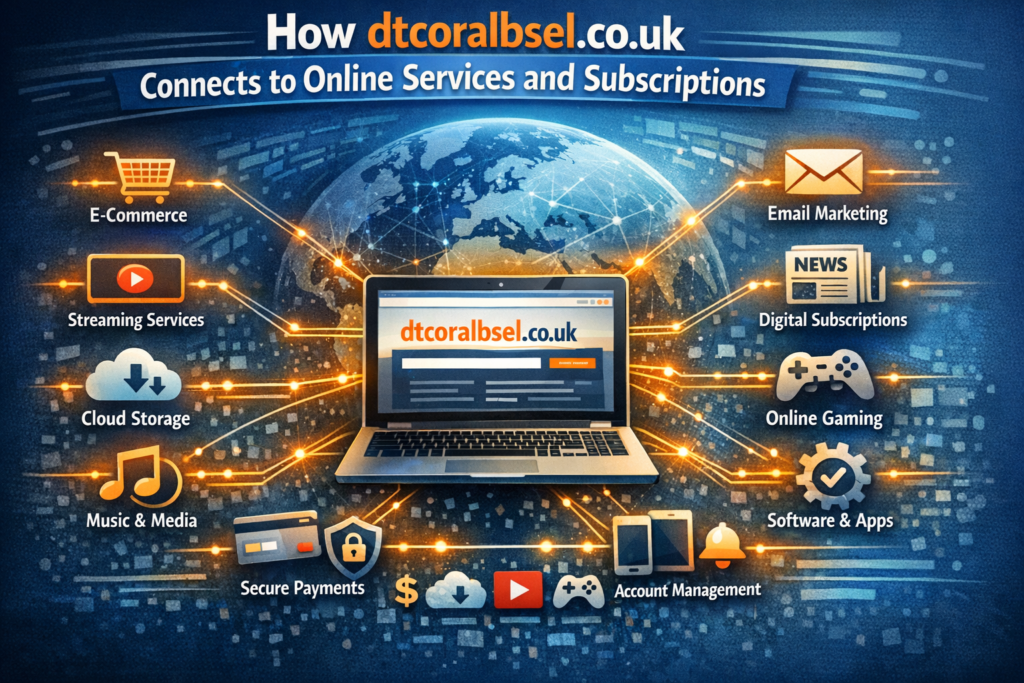
The rise of subscription economies explains much of the confusion around dtcoralbsel.co.uk. Today, nearly every industry—from productivity software to entertainment—operates on recurring billing models.
Subscriptions operate automatically. Once card details are saved, payments renew without manual approval each cycle. Payment processors manage these renewals behind the scenes. Because of this automation, users often forget they agreed to recurring billing months earlier.
Many services bundle payments through shared gateways. This means several unrelated platforms may use the same processor identifier. As a result, dtcoralbsel.co.uk could theoretically represent multiple different services depending on the situation.
This shared infrastructure improves efficiency for businesses but reduces clarity for consumers. Understanding this trade-off helps explain why unfamiliar descriptors are becoming increasingly common in digital finance.
Steps to Verify a dtcoralbsel.co.uk Charge Safely
When encountering dtcoralbsel.co.uk, follow a structured process rather than reacting emotionally. Financial professionals recommend starting with personal verification before contacting external parties.
First, review your recent purchases and subscription accounts. Check email receipts, payment confirmations, and app store histories. Many users discover the source within minutes using this method.
Next, confirm whether family members or colleagues share access to the payment card. Authorized transactions often appear unfamiliar simply because someone else made them.
If the charge remains unclear, contact your bank for additional transaction details. Banks can often see merchant information hidden from customer statements.
Finally, dispute the transaction only after investigation. Banks typically issue temporary credits while reviewing claims, ensuring customers remain protected during the process.
Why Transaction Names Like dtcoralbsel.co.uk Look So Strange
The unusual structure of dtcoralbsel.co.uk is intentional. Banking systems prioritize data efficiency over readability. Descriptors must function across international networks, regulatory frameworks, and accounting databases simultaneously.
Character limitations force companies to shorten names aggressively. Words merge, abbreviations replace full titles, and internal codes appear alongside merchant references.
Additionally, automated systems generate identifiers programmatically. These identifiers must remain unique across millions of transactions daily. Human-friendly naming simply cannot scale at that level.
While confusing, this system enables secure global payments. Without standardized descriptors, financial reconciliation would become significantly more complex.
When You Should Be Concerned About dtcoralbsel.co.uk
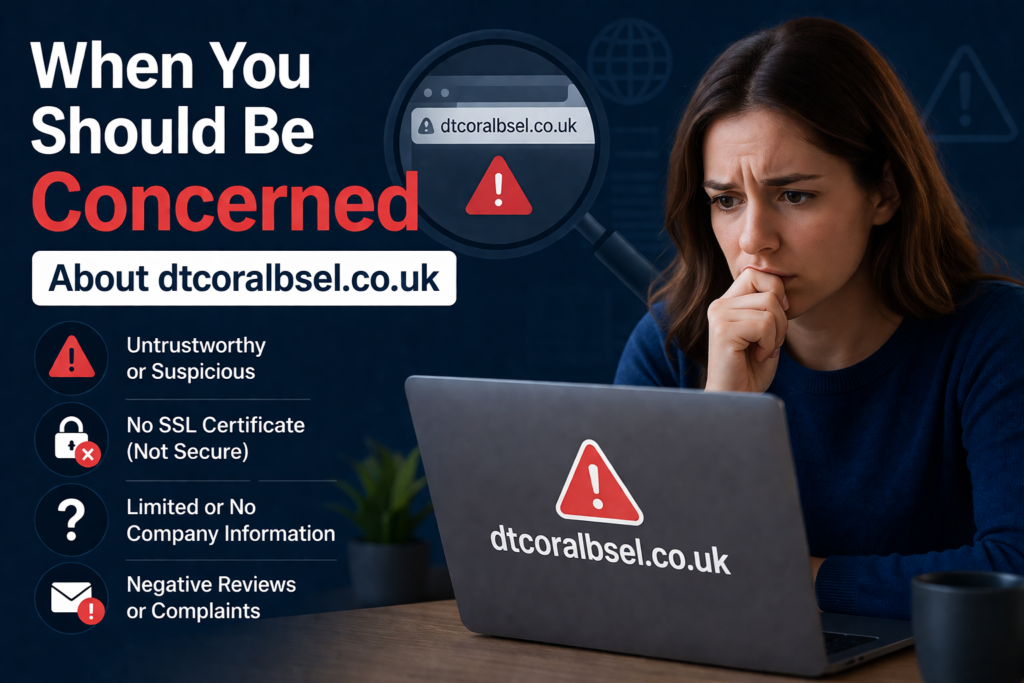
Although many cases are harmless, certain warning signs require attention. Financial awareness means recognizing when something moves beyond normal behavior.
Repeated unknown charges represent the most obvious red flag. Fraudsters sometimes test stolen cards using small payments before attempting larger transactions. Monitoring patterns becomes essential.
Unexpected international transactions or rapidly changing amounts also warrant investigation. Legitimate subscriptions typically charge consistent amounts at predictable intervals.
If you notice multiple unfamiliar descriptors alongside dtcoralbsel.co.uk, immediate bank contact is recommended. Acting quickly increases the likelihood of successful dispute resolution.
Remaining calm yet proactive is the ideal response strategy.
How Banks Handle Disputes Related to dtcoralbsel.co.uk
Banks follow standardized procedures when customers dispute unfamiliar transactions. Once reported, the bank opens an investigation and temporarily credits the account in many cases.
The bank then contacts the payment processor to request evidence. This may include authorization records, account activity logs, or IP verification data. If proof of authorization exists, the charge may be reinstated. Otherwise, it is permanently removed.
This process can take several weeks depending on international payment networks. During this time, customers should monitor accounts closely for additional activity.
Understanding the dispute process helps reduce stress because customers know protection systems are already in place.
How to Prevent Confusion From Future Charges
Preventing confusion is easier than resolving it later. Simple habits dramatically improve financial clarity.
Keeping a subscription list is one of the most effective strategies. Recording services at signup ensures you recognize future charges instantly.
Weekly statement reviews also help. Detecting unfamiliar transactions early simplifies resolution and prevents repeated billing cycles.
Using dedicated cards for subscriptions is another useful technique. Separating recurring payments from everyday spending makes tracking easier and limits risk exposure.
These small organizational practices transform financial management from reactive to proactive.
The Growing Importance of Understanding Billing Descriptors
The popularity of dtcoralbsel.co.uk searches reflects a broader shift in the global economy. As digital payments expand, backend identifiers are becoming more visible to everyday users.
Consumers now interact indirectly with payment infrastructure every day. Understanding descriptors empowers individuals to interpret financial data confidently rather than relying on guesswork.
Financial literacy today includes recognizing how transactions travel across networks, how processors operate, and why names may differ from expectations.
Learning these systems once provides lifelong benefits.
Final Thoughts: What dtcoralbsel.co.uk Really Means
dtcoralbsel.co.uk is best understood as a technical payment descriptor rather than a traditional company or suspicious entity. Its appearance on a statement usually indicates a processed debit transaction tied to digital services, subscriptions, or online purchases rather than immediate fraud. The confusion surrounding the name highlights how modern financial systems prioritize efficiency over clarity. While this design can initially alarm users, understanding billing descriptors removes uncertainty and restores confidence. Whenever you encounter dtcoralbsel.co.uk, remember the key approach: verify first, investigate calmly, and dispute only when necessary. With organized records and regular statement reviews, such entries become manageable rather than mysterious.
YOU MAY ALSO READ
About the Author