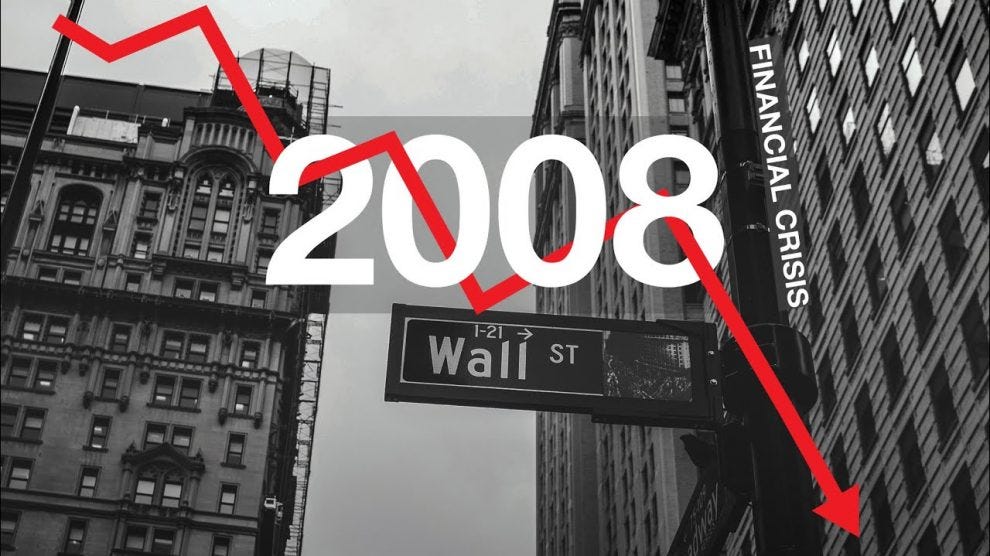
2008 Financial Crisis
Introduction: Understanding the Scale of the 2008 Financial Crisis
The 2008 Financial Crisis was not just another recession—it was a full-scale economic meltdown that reshaped financial systems, destroyed trillions in wealth, and altered how governments regulate markets. It began quietly, buried in the complexities of housing loans and financial instruments, but eventually exploded into a global disaster that affected nearly every country in the world.
At its core, the crisis exposed deep structural weaknesses in modern financial systems. It wasn’t caused by a single mistake or institution but rather a chain reaction of risky behavior, poor oversight, and misplaced trust in financial innovation. From banks issuing questionable loans to investors chasing high returns without understanding the risks, the groundwork for collapse had been laid years before 2008.
What made this crisis particularly devastating was its global reach. Unlike earlier economic downturns, which were often localized, this one spread rapidly due to interconnected financial markets. Institutions that seemed stable suddenly collapsed, governments rushed to intervene, and millions of people lost jobs, homes, and savings. To truly understand its impact, we need to unpack how it all began.
The Roots of the Crisis: Housing Boom and Risky Lendin
The origins of the crisis can be traced back to the early 2000s when housing markets, particularly in the United States, experienced a massive boom. Low interest rates and easy access to credit encouraged millions of people to buy homes. Financial institutions saw this as an opportunity to expand lending aggressively, often lowering standards in the process.
This led to the rise of what are known as subprime mortgages—loans given to borrowers with poor credit histories. These loans were riskier by nature, but lenders believed that rising housing prices would offset the risks. If borrowers defaulted, banks could simply sell the property at a higher value. This assumption turned out to be dangerously flawed.
The housing bubble continued to inflate as demand surged. People weren’t just buying homes to live in—they were buying them as investments, expecting prices to keep rising. This speculative behavior drove prices even higher, creating an unsustainable market. Eventually, when housing prices stopped climbing and began to fall, the entire system started to unravel.
Financial Innovation Gone Wrong: Mortgage-Backed Securities
One of the most critical factors behind the crisis was the widespread use of complex financial instruments like mortgage-backed securities (MBS). These were essentially bundles of home loans packaged together and sold to investors. The idea was to spread risk, but in reality, it often did the opposite.
Banks would issue mortgages, then sell them to investors through MBS, allowing them to free up capital and issue even more loans. This created a cycle of increasing risk. Because the original lenders no longer held the loans, they had less incentive to ensure borrowers could actually repay them.
Even more concerning was the role of credit rating agencies, which often gave these securities high ratings, suggesting they were safe investments. In reality, many of these securities were built on shaky foundations. Investors, including large institutions, relied heavily on these ratings and poured billions into assets they didn’t fully understand.
When borrowers began defaulting on their loans, the value of these securities plummeted. This triggered massive losses across the financial system, as institutions realized that what they thought were safe investments were anything but.
The Role of Major Financial Institutions
Several major financial institutions played key roles in the buildup and eventual collapse of the crisis. Companies like Lehman Brothers became symbols of the financial meltdown. Lehman’s bankruptcy in September 2008 marked a turning point, sending shockwaves through global markets.
Other institutions, such as Bear Stearns and AIG, also faced severe difficulties. Bear Stearns was rescued through a government-backed deal, while AIG required a massive bailout to prevent its collapse. These events highlighted how deeply interconnected financial institutions had become.
The failure of these institutions wasn’t just about poor decision-making—it was also about excessive risk-taking. Many banks had leveraged themselves heavily, meaning they borrowed large amounts of money to invest in assets. This amplified both gains and losses. When asset values fell, the losses were catastrophic.
The collapse of these institutions eroded confidence in the financial system. Banks became reluctant to lend to each other, leading to a credit freeze that further worsened the economic downturn.
The Global Spread: From Wall Street to the World
Although the crisis began in the United States, it quickly spread across the globe. This was largely due to the interconnected nature of modern financial systems. Banks and investors around the world had invested in U.S. mortgage-backed securities, meaning losses were felt far beyond American borders.
Countries in Europe were particularly affected. Financial institutions in nations like the United Kingdom and Germany had significant exposure to toxic assets. Governments were forced to step in, providing bailouts and guarantees to stabilize their banking systems.
Emerging economies were not immune either. While they were less directly exposed to subprime mortgages, they suffered from reduced global trade and investment. As demand from developed economies fell, exports declined, leading to economic slowdowns.
The crisis also led to a sharp decline in global stock markets. Indices like the S&P 500 experienced dramatic drops, wiping out trillions in market value. Investors lost confidence, and volatility became the norm.
Government Response: Bailouts and Stimulus Packages
In response to the crisis, governments around the world took unprecedented action. In the United States, the government introduced the Troubled Asset Relief Program (TARP), which aimed to stabilize the financial system by purchasing distressed assets and injecting capital into banks.
Central banks also played a crucial role. The Federal Reserve slashed interest rates and implemented unconventional measures like quantitative easing. These actions were designed to increase liquidity and encourage lending.
While these measures helped prevent a complete collapse of the financial system, they were not without controversy. Critics argued that bailouts rewarded irresponsible behavior and created moral hazard, where institutions might take excessive risks expecting future rescues.
Nevertheless, without these interventions, the crisis could have been far worse. Governments essentially acted as a safety net, preventing the financial system from imploding entirely.
Impact on Ordinary People
The human cost of the crisis was immense. Millions of people lost their jobs as businesses cut back or shut down entirely. Unemployment rates soared in many countries, leading to widespread financial hardship.
Foreclosures became a common occurrence, especially in the United States. Families who had taken out mortgages they could no longer afford were forced out of their homes. Entire neighborhoods were affected, with vacant properties and declining property values.
Savings and retirement funds were also hit hard. As stock markets crashed, many people saw their investments shrink significantly. This had long-term implications, particularly for those nearing retirement.
The psychological impact should not be overlooked either. Financial stress, uncertainty, and loss of security took a toll on mental health. The crisis wasn’t just an economic event—it was a deeply personal one for millions of individuals.
Regulatory Failures and Lessons Learned
One of the most widely discussed aspects of the crisis is the role of regulatory failure. Many experts argue that inadequate oversight allowed risky practices to flourish unchecked. Financial institutions were able to take on excessive risk without sufficient scrutiny.
In the aftermath, governments introduced new regulations to prevent a similar crisis. In the United States, the Dodd-Frank Act aimed to increase transparency and reduce risk in the financial system. It also created new regulatory bodies to oversee financial institutions.
Another key lesson was the importance of understanding complex financial products. Many investors and even regulators did not fully grasp the risks associated with mortgage-backed securities and derivatives.
The crisis also highlighted the need for better risk management within financial institutions. Relying solely on models and assumptions proved to be dangerous, especially when those assumptions turned out to be wrong.
Long-Term Economic Consequences
The effects of the crisis were felt for years after 2008. Economic growth slowed, and recovery was uneven across different regions. Some countries rebounded relatively quickly, while others struggled with prolonged recessions.
Public debt levels increased significantly as governments spent heavily to stabilize their economies. This led to debates about austerity and fiscal responsibility, particularly in Europe.
The crisis also changed consumer behavior. People became more cautious with spending and borrowing, which had lasting effects on economic activity. Trust in financial institutions declined, and many individuals became more skeptical of the system.
Additionally, the crisis influenced monetary policy for years to come. Central banks maintained low interest rates for extended periods, shaping the economic environment well into the next decade.
The Crisis in Retrospect: Could It Have Been Prevented?
Looking back, many experts believe that the crisis was preventable. Warning signs were present, including rising housing prices, increasing levels of debt, and the proliferation of risky financial products.
However, these warnings were often ignored or underestimated. There was a widespread belief that markets were self-correcting and that financial innovation had made the system more stable. This overconfidence played a significant role in the buildup to the crisis.
Better regulation, improved risk management, and greater transparency could have mitigated the impact. However, implementing these measures would have required a shift in mindset and priorities across the financial industry.
The crisis serves as a reminder that economic systems are complex and fragile. Even small imbalances can escalate into major disruptions if left unchecked.
Conclusion: A Defining Moment in Modern Economic History
The 2008 Financial Crisis remains one of the most significant events in modern economic history. It exposed fundamental flaws in financial systems, reshaped global markets, and changed how governments approach regulation.
While the world has largely recovered, the lessons of the crisis continue to influence policy and decision-making. It serves as a cautionary tale about the dangers of excessive risk-taking, lack of oversight, and misplaced confidence.
Understanding the crisis is not just about looking at the past—it’s about preparing for the future. By learning from these events, policymakers, institutions, and individuals can work towards building a more stable and resilient financial system.
In the end, the crisis wasn’t just about numbers and markets—it was about people, trust, and the consequences of collective decisions. And that’s why its impact is still felt today.
YOU MAY HAVE MISSED
About the Author