intel arc b580
When people talk about GPUs, names like NVIDIA and AMD usually dominate the conversation. But over the last few years, Intel has been quietly building something serious. The Intel Arc lineup isn’t just a side project—it’s a long-term play to reshape the graphics card market. And right in the middle of that conversation sits the Intel Arc B580.
This article breaks everything down in a way that’s easy to follow but still packed with expert-level insight. Whether you’re a gamer, a creator, or just someone curious about GPUs, you’ll walk away understanding exactly where the Intel Arc B580 stands—and why it matters.
What Is the Intel Arc B580?
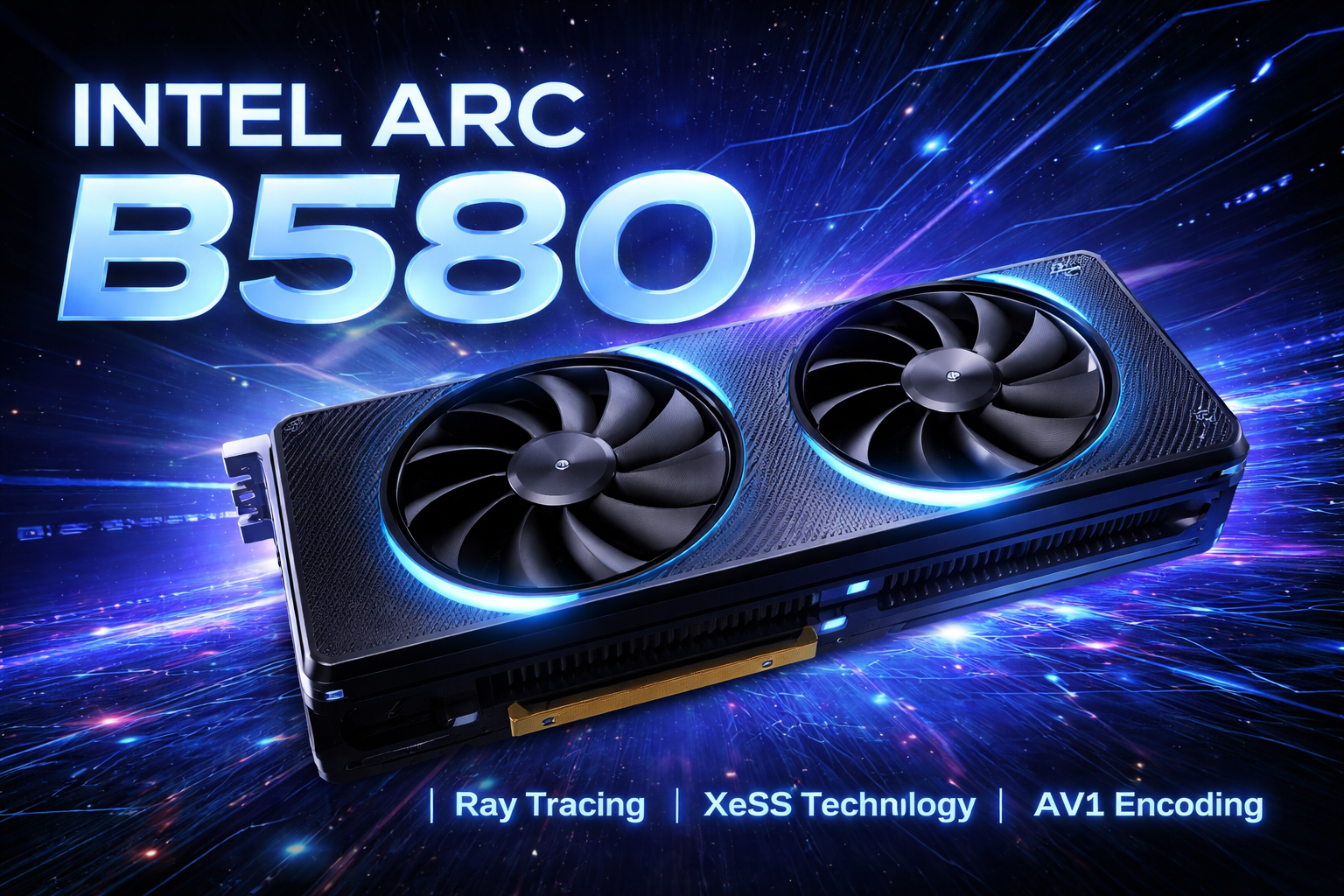
The Intel Arc B580 is part of Intel’s newer generation of discrete GPUs, expected to build upon the Arc “Alchemist” foundation and push into a more refined architecture. It represents Intel’s attempt to compete directly with mid-range offerings from AMD and NVIDIA, where most gamers actually buy their GPUs.
At its core, the B580 isn’t just about raw performance. It’s about proving that Intel can be a serious third player in a market that’s been a duopoly for decades. That’s a big deal. Competition drives innovation, and Intel entering this space aggressively means better pricing, better features, and more options for consumers.
From a positioning standpoint, the B580 is expected to sit intel arc b580 comfortably in the mid-tier category. That means it’s likely aimed at 1080p and 1440p gaming, with enough power to handle modern AAA titles without breaking the bank. It’s not trying to be the fastest GPU on the planet—it’s trying to be the smartest buy.
The Evolution of Intel Arc Graphics
Before diving deeper into the B580, it’s important to understand how intel arc b580 Intel got here. Arc didn’t just appear overnight. It’s the result of years of development, acquisitions, and strategic planning.
Intel’s first major step into discrete GPUs came with the Arc A-series (Alchemist). These GPUs showed promise but also revealed some rough edges—especially in drivers and compatibility. Early adopters noticed inconsistent performance across different games, particularly older titles using DirectX 9.
But here’s the thing: Intel didn’t back down. Instead, they doubled down. Through continuous driver updates and software improvements, Arc GPUs improved significantly over time. In fact, some games saw massive performance gains months after release.
The B580 is expected to build on these lessons. It’s not just a hardware intel arc b580 upgrade—it’s the result of everything Intel learned from its first generation. That makes it much more exciting than it might seem at first glance.
Architecture and Design Philosophy
One of the most interesting aspects of the Intel Arc B580 is its architecture. While exact details may vary depending on final specifications, it’s expected to be part of Intel’s next-gen GPU architecture—often referred to as a successor to Alchemist (possibly “Battlemage”).
The design philosophy here is pretty clear: efficiency, scalability, and modern features.
Instead of just brute-forcing performance with higher power consumption, Intel is focusing on smarter design. That includes improved ray tracing cores, better AI acceleration, and more efficient memory usage. These are the kinds of things that matter in real-world usage, not just benchmark numbers.
Another key aspect is Intel’s use of Xe cores. These cores handle a wide range of tasks, from rendering graphics to accelerating AI workloads. With each generation, Intel is refining how these cores work together, making them more efficient and more powerful.
The B580 is expected to benefit heavily from these improvements, intel arc b580 offering better performance per watt and more consistent frame rates across different workloads.
Performance Expectations
Let’s get to the part everyone cares about: performance.
The Intel Arc B580 is likely to target the sweet spot of gaming performance. That means smooth gameplay at 1080p ultra settings and solid performance at 1440p high settings. For most gamers, that’s exactly where you want to be.
What makes this interesting is how Intel approaches performance. Instead of focusing only on raw FPS numbers, Intel is putting a lot of emphasis on frame consistency and latency. That means fewer stutters and smoother gameplay overall.
Another area where the B580 could shine is modern APIs like DirectX 12 and Vulkan. Intel’s Arc GPUs have already shown strong performance in these environments, and the B580 is expected to push that even further.
However, performance isn’t just about hardware. Drivers play a huge role, and this is where Intel has made the most progress. If the B580 launches with mature drivers, it could avoid many of the issues that affected earlier Arc GPUs.
Gaming Experience on the Intel Arc B580
Gaming on the Intel Arc B580 is expected to feel different—in a good way.
For starters, Intel has been investing heavily in features like XeSS (Xe Super Sampling). This technology uses AI to upscale lower-resolution images, delivering better performance without sacrificing too much visual quality. It’s Intel’s answer to NVIDIA’s DLSS and AMD’s FSR.
With XeSS, the B580 could deliver higher frame rates in demanding games while still maintaining sharp visuals. That’s a huge advantage, especially for gamers who want to push their settings without upgrading to a high-end GPU.
Another factor is driver optimization. Intel has been working closely with game developers to ensure better compatibility and performance. This means newer titles are more likely to run smoothly right out of the box.
Of course, there may still be some challenges with older games, but Intel has already shown a willingness to address these issues over time. That’s reassuring for anyone considering the B580.
Content Creation and Productivit
The Intel Arc B580 isn’t just for gaming—it’s also designed with creators in mind.
Whether you’re editing videos, working with 3D models, or streaming content, the B580 is expected to offer solid performance across a range of creative tasks. Intel’s GPUs include dedicated hardware for encoding and decoding video, which can significantly speed up workflows.
One standout feature is AV1 encoding. This newer video codec offers better compression and quality compared to older standards like H.264. For streamers and content creators, this can mean higher-quality streams with lower bandwidth usage.
Additionally, Intel’s focus on AI acceleration could benefit applications like photo editing and video processing. Tools that rely on machine learning can take advantage of the GPU’s capabilities, resulting in faster rendering and smoother performance.
Power Efficiency and Thermal Design
Power efficiency is becoming increasingly important, and Intel seems to understand that.
The Arc B580 is expected to offer improved performance per watt compared to earlier models. This means you get better performance without significantly increasing power consumption. That’s good news for both your electricity bill and your system’s cooling requirements.
Thermal design also plays a big role here. Efficient cooling solutions can help maintain consistent performance, especially during long gaming sessions. Intel’s partners are likely to offer a range of custom designs, from compact dual-fan models to more robust triple-fan setups.
Overall, the B580 is shaping up to be a well-balanced GPU in terms of power and thermals.
Software Ecosystem and Drivers
If there’s one area where Intel has made the most progress, it’s software.
The Arc Control software provides a centralized hub for managing settings, monitoring performance, and updating drivers. It’s clean, user-friendly, and constantly improving.
Driver support has also come a long way. Early Arc GPUs struggled with inconsistent performance, but Intel has addressed many of these issues through regular updates. In some cases, performance improvements have been dramatic.
For the B580, this means a much more polished experience from day one. Intel has learned from its mistakes and is clearly committed to supporting its GPUs long-term.
Pricing Strategy and Market Position
Pricing will be a critical factor for the Intel Arc B580.
Intel’s strategy so far has been aggressive pricing. By offering competitive performance at lower prices, they’ve been able to attract attention and gain market share. The B580 is expected to follow a similar approach.
This could make it a very attractive option for budget-conscious gamers who still want solid performance. If Intel gets the pricing right, the B580 could become one of the best value GPUs in its class.
It’s also worth noting that increased competition benefits everyone. Even if you don’t buy an Intel GPU, their presence in the market can lead to better prices and features from other manufacturers.
Comparison with Competing GPUs
When comparing the Intel Arc B580 to competing GPUs, it’s important to look beyond raw specs.
In terms of performance, the B580 is expected to compete with mid-range offerings from AMD and NVIDIA. This includes GPUs that are popular among mainstream gamers.
Where Intel could stand out is in features and value. Technologies like XeSS, strong AV1 support, and competitive pricing could give the B580 an edge in certain scenarios.
However, competition is fierce. NVIDIA has a strong ecosystem with DLSS and ray tracing, while AMD offers excellent rasterization performance and open-source technologies.
The B580 doesn’t need to beat them in every category—it just needs to offer a compelling overall package. And based on what we’ve seen so far, it has a real shot at doing exactly that.
Potential Challenges and Limitations
Let’s be real—no GPU is perfect, and the Intel Arc B580 will likely have its share of challenges.
One potential issue is driver maturity. While Intel has made significant progress, they’re still relatively new to the discrete GPU market. There may be occasional compatibility issues, especially with older games.
Another challenge is brand perception. Many gamers are used to buying NVIDIA or AMD GPUs, and convincing them to switch won’t be easy. Intel needs to build trust over time.
There’s also the question of availability. If supply is limited intel arc b580 or pricing fluctuates, it could impact the B580’s success.
That said, these challenges aren’t insurmountable. Intel has the resources and determination to overcome them—it’s just a matter of execution.
Future of Intel Arc and What B580 Means
The Intel Arc B580 isn’t just another GPU—it’s a statement.
It shows that Intel is serious about competing in the graphics market. It’s not a one-time experiment—it’s part of a long-term strategy.
Looking ahead, Intel’s roadmap includes multiple generations of GPUs, each building on the last. The lessons learned from the B580 will likely influence future designs, making them even more competitive.
For consumers, this is great news. More competition means more innovation, better prices, and more choices.
Final Thoughts on Intel Arc B580
The Intel Arc B580 represents a crucial step forward for Intel and the GPU market as a whole.
It’s not just about performance—it’s about potential. It’s about giving consumers another option and pushing the industry forward. And while it may not be perfect, it doesn’t need to be.
If Intel can deliver on its promises—solid performance, competitive pricing, and reliable drivers—the B580 could become a standout option in the mid-range GPU market.
YOU MAY HAVE MISSED
intel arc b580
About the Author